
Private practice for gynecological endocrinology in Düsseldorf
Hormonal questions need a specialized answer.
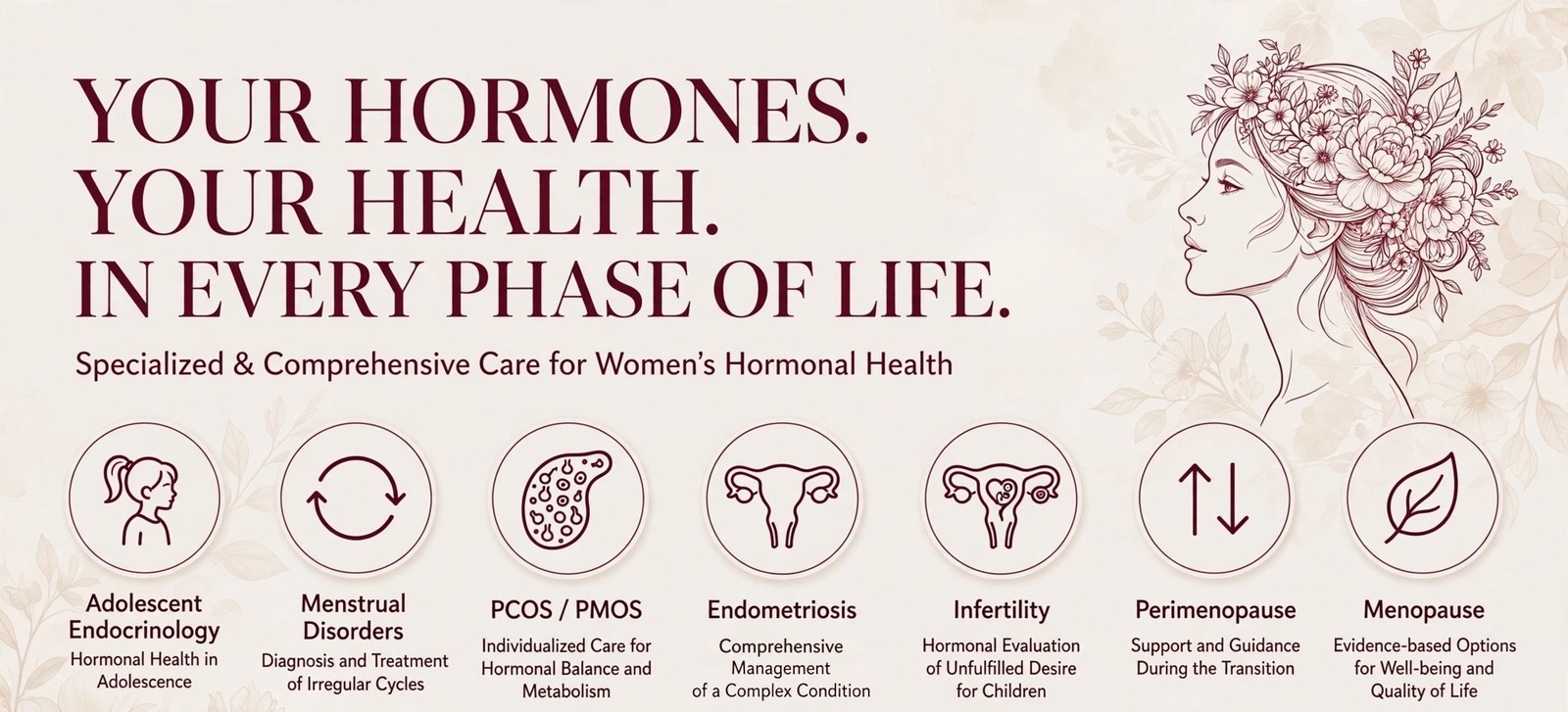
Gynecological endocrinology supports women through every stage of life. Hormonal and reproductive health are never viewed in isolation, but always together with their metabolic, cardiovascular and psychological implications.
Hormonal disorders often have a chronic course. The longer they remain untreated, the greater their impact on body and mind. Treatment should therefore start early, be tailored to each woman and be based on current medical knowledge.
Medical services:
- Hormonal assessment and treatment for infertility and recurrent miscarriages
- PCOS / PMOS
- Endometriosis
- Perimenopause and menopause
- Cycle problems
- Hormonal problems in childhood and puberty
- Contraception
At a glance:
- Way of working
- The practice follows the standards of a specialized practice for gynecological endocrinology. It works only in gynecological endocrinology and does not offer general gynecology or obstetric services.
- Insurance
- Private practice, all women welcome regardless of their insurance (patients with statutory health insurance pay privately)
- Appointments
- In person at the practice in Düsseldorf or as a video consultation.
- Languages
- German, English, Greek
“Gynecological endocrinology is an evidence‑based science with the human being at its center.”
Dr. med. (Univ. Szeged) Apostolos KampagiannisExpert in Gynecological Endocrinology (ISGE)
Areas of Expertise
Diagnosis and treatment follow the guidelines of the largest societies for gynecological endocrinology and reproductive medicine worldwide and take into account the latest scientific evidence.
Infertility
Assessment and treatment of hormonal causes of infertility according to the guidelines of the European Society of Human Reproduction and Embryology (ESHRE)
Infertility
Assessment and treatment of hormonal causes of infertility according to the guidelines of the European Society of Human Reproduction and Embryology (ESHRE)What it is about
According to the World Health Organization, about one in six people of reproductive age are affected by infertility. Once other causes have been ruled out, a hormonal disorder may be the main cause.
Hormonal disorders can affect every stage of reproduction. Even so, a specialized hormonal assessment is often missing from the work-up.
When to get checked
If you are not pregnant after twelve months of regular sex, or after six months from the age of 35.
Aim of the practice
The aim of the practice is not only a pregnancy, but also normal placental function and the birth of a healthy child. Hormonal balance creates the right conditions for both. If a method of assisted reproduction is needed, a better hormonal environment can improve the chances of success.
PCOS / PMOS
Irregular periods, skin problems, weight gain, emotional strain, reproductive disorders. Comprehensive care according to the principles of the International Society of Gynecological Endocrinology (ISGE)
PCOS / PMOS
Irregular periods, skin problems, weight gain, emotional strain, reproductive disorders. Comprehensive care according to the principles of the International Society of Gynecological Endocrinology (ISGE)What it is about
Polycystic ovary syndrome is the most common hormonal disorder in women of childbearing age. It affects 7-20% of women of reproductive age, depending on the diagnostic criteria used and the geographic region.
PCOS is a complex disorder. A genetic predisposition is shaped by environmental factors, even before birth. Because of these different influences, there are two types, four phenotypes and many forms. According to current knowledge, each form can have a different outlook. PCOS is a dynamic condition that changes over the course of each woman's life.
When to get checked
If you have cycle problems, excess hair growth, hair loss, acne, weight gain, mental health problems, or difficulty conceiving. The syndrome can also be present with regular periods. An early diagnosis is important.
Aim of the practice
The aim of the practice is to recognize the form of PCOS correctly and early. Every treatment aims to improve quality of life. Every woman should understand the syndrome, the treatment options and their limits. The practice chooses each treatment with care, because medicines that ignore the future hormonal and metabolic balance can worsen the outlook. The practice also aims to prevent complications such as infertility, diabetes, metabolic syndrome, heart disease and a higher risk of endometrial cancer.
Endometriosis
Pain, infertility and a lower quality of life. And much more. Care according to the guidelines of the European Society of Human Reproduction and Embryology (ESHRE)
Endometriosis
Pain, infertility and a lower quality of life. And much more. Care according to the guidelines of the European Society of Human Reproduction and Embryology (ESHRE)What it is about
Endometriosis is a chronic, progressive disease in which cells of the lining of the uterus grow outside the uterus and cause anatomical, hormonal and inflammatory changes that affect quality of life. It affects about 10-12% of women of reproductive age, and current knowledge shows that it can stay with a woman for her whole life, even after menopause.
Besides pain and fertility problems, it is linked to a higher risk of heart and blood vessel disease, autoimmune and rheumatic diseases and certain cancers. Today endometriosis is seen as a disease of the whole body. Its treatment should therefore go beyond gynecology.
When to get checked
If you have period pain that limits daily life or hardly responds to painkillers, pain during sex, or difficulty getting pregnant. On average, it takes 5 to 12 years from the first symptoms to a diagnosis. Early diagnosis is important, because endometriosis can progress and cause permanent changes to the organs.
Aim of the practice
The aim of the practice is to improve quality of life, to keep the disease under control, to create the best possible conditions for a pregnancy and to prevent later complications.
The practice treats endometriosis comprehensively and offers the right support for each symptom. Besides the physical symptoms, emotional support plays a key role. This includes treating tiredness, mood swings, low mood and sleep problems.
Perimenopause and menopause
Information about the new stage of life. Better quality of life. Safety for the future. Care according to the guidelines of the International Menopause Society (IMS) and the European Menopause and Andropause Society (EMAS)
Perimenopause and menopause
Information about the new stage of life. Better quality of life. Safety for the future. Care according to the guidelines of the International Menopause Society (IMS) and the European Menopause and Andropause Society (EMAS)What it is about
Perimenopause is the transition before menopause, when the reproductive phase of life comes to an end. Perimenopause can start quite early, from the age of 38 to 40, long before changes in a woman's periods become visible. Menopause itself occurs at around the age of 51.
Perimenopause and menopause are not hormonal disorders. They are normal phases in a woman's life. Even so, the hormonal changes often cause symptoms that disturb quality of life. Treatment is therefore often needed. Because women live longer today, they spend an ever larger part of their lives in this phase.
When to get checked
If you have hot flashes and night sweats, exhaustion, sleep problems, weight gain, mood swings, anxiety or low mood, problems concentrating, changes in skin and hair, less interest in sex, stronger PMS symptoms, joint pain, vaginal dryness or big changes in bleeding. A check-up is also advisable if periods stop before the age of 40.
Aim of the practice
The aim of the practice is for every woman to cope well with daily life, manage her tasks and enjoy her life without limits. A better quality of life is important. But the main aim is to keep body and mind healthy in the years ahead. Perimenopause and the first years after menopause are a window of opportunity. Good care in this time can lower all-cause mortality later in life.
Cycle problems and amenorrhea
A period that is missing, comes irregularly or worsens quality of life. Comprehensive care according to the principles of the International Society of Gynecological Endocrinology (ISGE)
Cycle problems and amenorrhea
A period that is missing, comes irregularly or worsens quality of life. Comprehensive care according to the principles of the International Society of Gynecological Endocrinology (ISGE)What it is about
A regular period is an important vital sign. When it stops, this is called amenorrhea: primary if a young girl never gets her first period, secondary if periods had started and then stop for more than three months. If the cycle is regularly longer than 35 days, this is called oligomenorrhea.
Amenorrhea can be a sign of a serious illness. Common causes are thyroid disorders, high prolactin, PCOS, large changes in weight, competitive sport or stress.
When to get checked
If the period stops for more than three months, the cycle is much shorter or longer, there is bleeding between periods, or the days before the period come with strong physical or emotional symptoms (PMS, PMDD). A check-up is also advisable if the period becomes irregular or stops with intense training.
Aim of the practice
The aim of the practice is to find the cause and make the diagnosis. Treating amenorrhea does not always mean bringing back a cycle. Treatment depends on the life stage and on what the woman needs for her physical and emotional balance.
Puberty
Too early or too late, first cycle problems. Comprehensive care according to the principles of the International Society of Gynecological Endocrinology (ISGE)
Puberty
Too early or too late, first cycle problems. Comprehensive care according to the principles of the International Society of Gynecological Endocrinology (ISGE)What it is about
Every girl goes through puberty at her own pace. Sometimes, though, it starts much too early or too late, or the first cycles are so difficult that school and daily life suffer.
When to get checked
If breast development starts before the age of 8, has not started by 13, or if there is still no period by 15. A check-up is also advisable with increased bleeding or severe pain during periods, or with bleeding that is still very irregular years after the menarche (the first period).
Aim of the practice
The aim of the practice is an early diagnosis. If that is not yet possible, the aim is to find girls who are at risk of hormonal problems later. The most important aim is to make daily life easier and to support the girl so that she fits in well socially. Every treatment considers the special phase of puberty. Treatment is used only if it does not disturb the body's hormonal maturation during this sensitive period, which is critical for its final development.
Hormonal contraception
Many options for safe and reliable contraception
Hormonal contraception
Many options for safe and reliable contraceptionWhat it is about
Today there are many hormonal methods of contraception. Some contain estrogen and progestin, such as the combined pill, the vaginal ring and the patch. Others contain only progestin, such as the mini-pill, the hormonal IUD, the implant and the three-month injection. They differ in safety, effectiveness, use and side effects.
The choice should suit each individual woman. Age, smoking, weight, blood pressure, migraine, thrombosis in the woman herself or in the family and other illnesses all play a role.
When to get advice
Before first using contraception, with side effects such as spotting, mood changes or headaches, when changing method, after a pregnancy and from the age of 35.
Aim of the practice
The aim of the practice is safe contraception. Every hormonal method also has positive effects that have nothing to do with contraception. The aim is to make use of these effects while limiting side effects.
From appointment to treatment plan
Book an appointment
Online via Doctolib. The appointment can take place at the practice in Düsseldorf or by video.
Results
Upload existing results on Doctolib beforehand or bring them to the appointment.
First consultation
A detailed talk about your symptoms and history. If needed, the doctor arranges blood tests and explains the next steps of treatment.
Treatment
A personal treatment plan.
Useful for the first appointment
Existing results, especially earlier hormone tests, ultrasound and surgery reports, a list of your current medication and, if possible, a cycle diary of the last three months. For fertility questions, also your partner's results, for example a semen analysis, and documents from earlier fertility treatments.
You do not need a blood test before the first appointment.
Reviews on Google
„Ein absolut fantastischer Arzt!“
„… immer darauf bedacht, dass man die hochkomplexen Zusammenhänge der Hormone und ihre Wirkungen versteht.“
«… Η κόρη μου ένιωσε ασφάλεια, τον άκουσε με ενδιαφέρον … Μια πραγματικά ουσιαστική επικοινωνία!»
„Seine Expertise, sein Fachwissen und seine Menschlichkeit …“
„He is the only doctor who has truly taken the time to understand my PCOS …“
„He has helped me tremendously with my perimenopause symptoms …“
Contact
Address
Privatpraxis für gynäkologische Hormonsprechstunde
Prinzenallee 7, 40549 Düsseldorf, Germany
4th floor (Regus)
Phone
Getting there
Underground (U-Bahn) stop close by. Free parking on the street (parking is not always possible).